
Tungsten Ice Jigs for Panfish, Perch and Crappie: Sizes and Tips
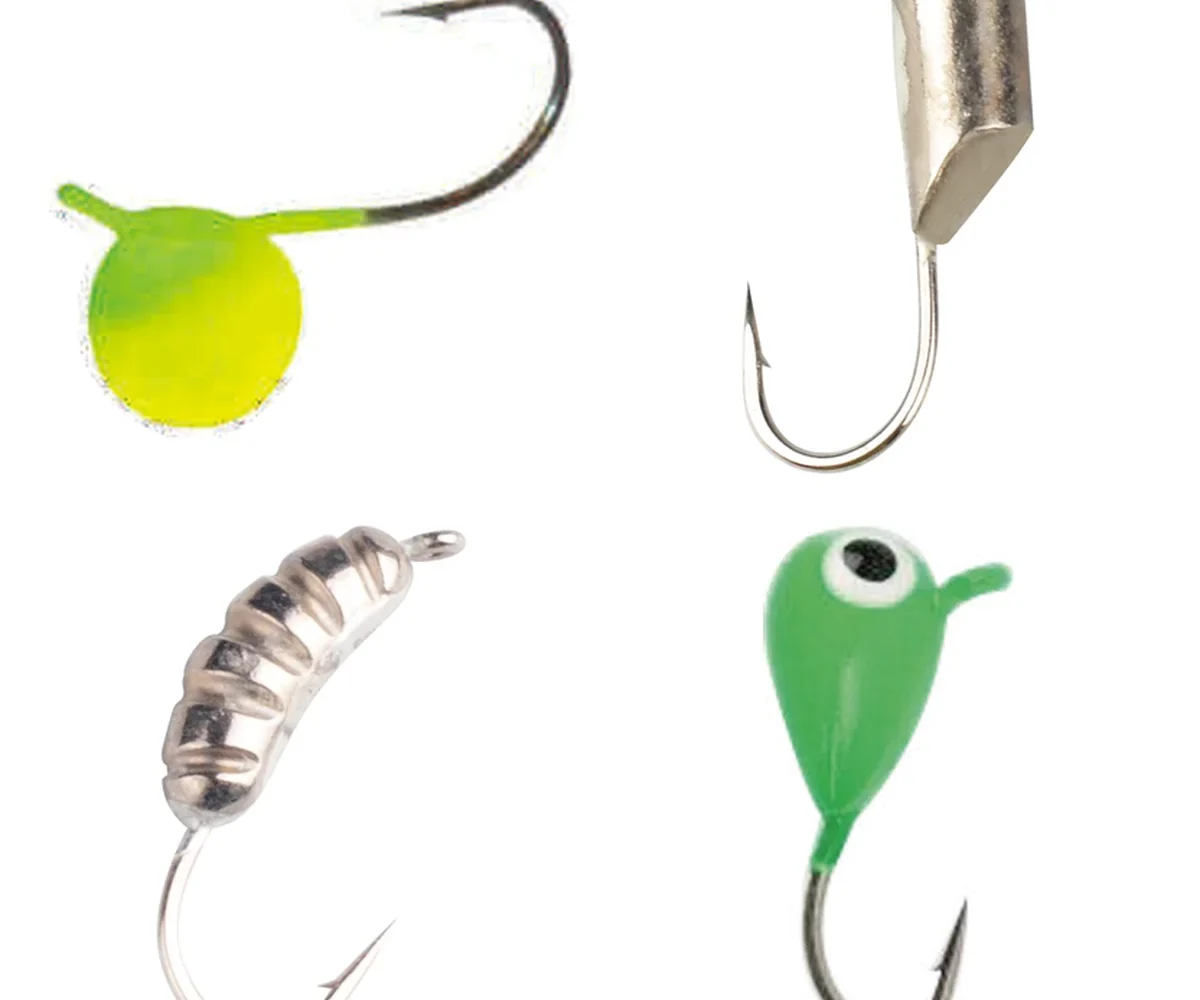
Short answer: tungsten ice jigs are small and heavy, so they reach panfish fast and let you feel light bites on thin line. For bluegill use a 2.5 to 3 mm jig on a #14 to #18 hook, for perch and crappie 4 to 5 mm on #12 to #14, and go to 6 mm and up in deep water or when fish are aggressive. Fish them on 2 to 4 lb line with an ultralight 24 to 30 inch rod, tip with spikes (maggots), waxworms or a small plastic, and use short jigs with long pauses.
Why tungsten for ice fishing?
Tungsten is about 1.7 times denser than lead. A tungsten ice jig is roughly 40% smaller than a lead jig of the same weight, so you can fish a tiny, natural bait at depth and still get it down quickly when a school moves under the hole. It also sends more feel up the line, which matters when crappie and bluegill bite very lightly.
Size chart
| Jig size | Weight | Hook | Best for |
|---|---|---|---|
| 2.5–3 mm | 0.1–0.5 g | #16–#18 | Bluegill, sunfish, shallow water, finicky fish |
| 4 mm | 0.6–1 g | #14 | Bluegill and perch, the most popular size |
| 5 mm | 1.2–1.9 g | #12–#14 | Perch and crappie, 15–30 ft of water |
| 6–7 mm | 2–4.4 g | #10–#12 | Deep basins, jumbo perch, trout |
| 8 mm and up | 4.5 g and up | #8 and larger | Walleye and fast drops |
These match our tungsten ice jigs (2.5 to 12 mm, Japanese hooks).
Horizontal or vertical jig?
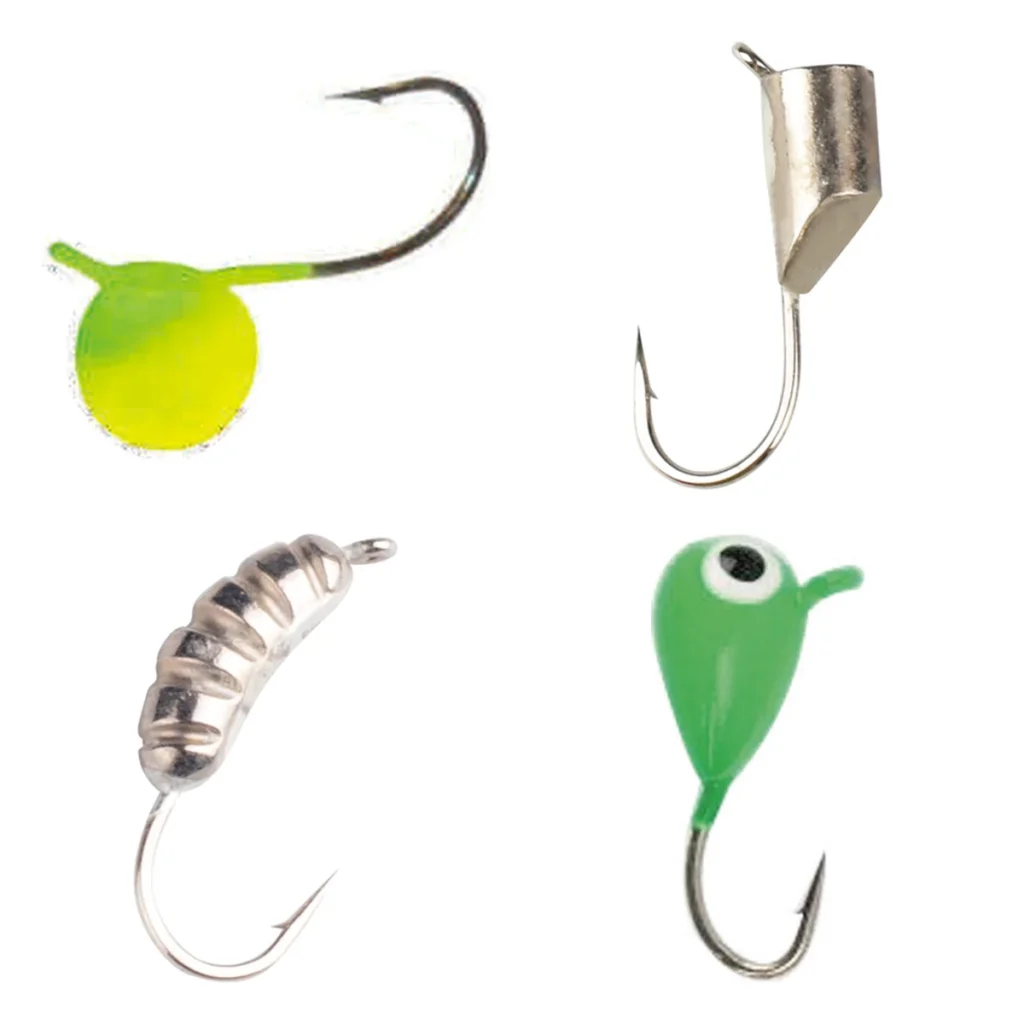
- Horizontal jigs (eyelet on top, like our ball and drop jigs with eyelet) hang flat, so the bait looks like a small insect or fish. They are the first choice for bluegill and crappie.
- Vertical jigs (line tied at the head) fall faster and wobble more; good for perch near the bottom.
- Slim shapes (skinny, javi and maggot jigs) have a narrow profile for fussy fish in clear water.
Colours
| Conditions | Colours |
|---|---|
| Clear water, bright day | Silver, gold, natural, white |
| Stained water, cloudy | Chartreuse, orange, pink, firetiger |
| Low light and deep water | Glow (charge it with a light), UV, purple |
Charge glow jigs every few minutes with a small light. See also our glow ice jigs with 3D eyes.
How to fish them
- Drop the jig to the bottom, then reel up 6 to 12 inches. On a flasher, watch for marks coming up to your jig.
- Give 3 to 5 short shakes of the rod tip, then hold dead still for 5 to 10 seconds. Most bites come on the pause.
- If fish look and leave, go smaller or slower; if they hit hard, go bigger to catch them faster.
- Watch the rod tip or a spring bobber. A crappie bite often lifts the jig, so the tip goes slack.
Tipping the jig
- Spikes or maggots: 1 to 3 on the hook, the standard for bluegill and perch.
- Waxworms: bigger scent and profile.
- Small plastics: 1 inch tails and nymph shapes last longer and are faster in a hot bite.
Rod, line and tackle
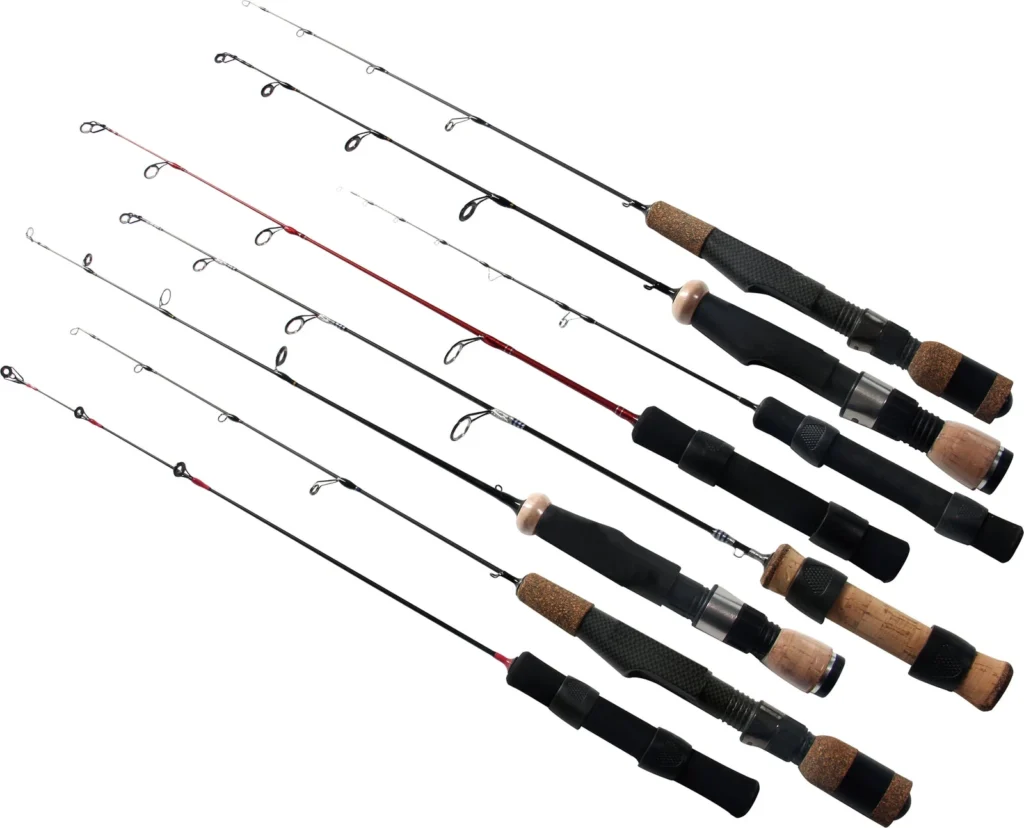
Use a 24 to 30 inch ultralight ice fishing rod with a sensitive tip, 2 to 4 lb mono or fluorocarbon and a small spinning reel. Keep jigs sorted by size in a small waterproof pocket box.
FAQ
What size tungsten ice jig for crappie?
4 to 5 mm on a #12 to #14 hook. Go up to 6 mm in deep water or wind.
Are tungsten ice jigs worth it?
Yes for panfish. They sink faster and are smaller than lead jigs of the same weight, so you fish a natural bait at depth and feel more bites.
What colour ice jig is best?
Glow and UV in low light and deep water; gold, silver and natural in clear water; chartreuse, orange and pink in stained water.
Should I tip an ice jig?
Usually. Spikes, waxworms or a small plastic tail add scent and profile; in a fast bite a plastic saves rebaiting.
Sourcing this tackle for your store or brand
We supply US tackle shops, online sellers and private-label brands from our factory in China. Soft plastics start from 3,000 pcs per size per color, hard lures from 500 pcs per size per color, private-label fishing line from 50 spools; MOQ for terminal tackle, floats and weights is confirmed in your quote. Stock samples ship within 2 working days after payment, and we quote EXW, FOB, CIF or DDP to the US. Send us your list for a quote.