
Metal Jig Weight Chart: How Heavy a Jig for Depth, Current and Line
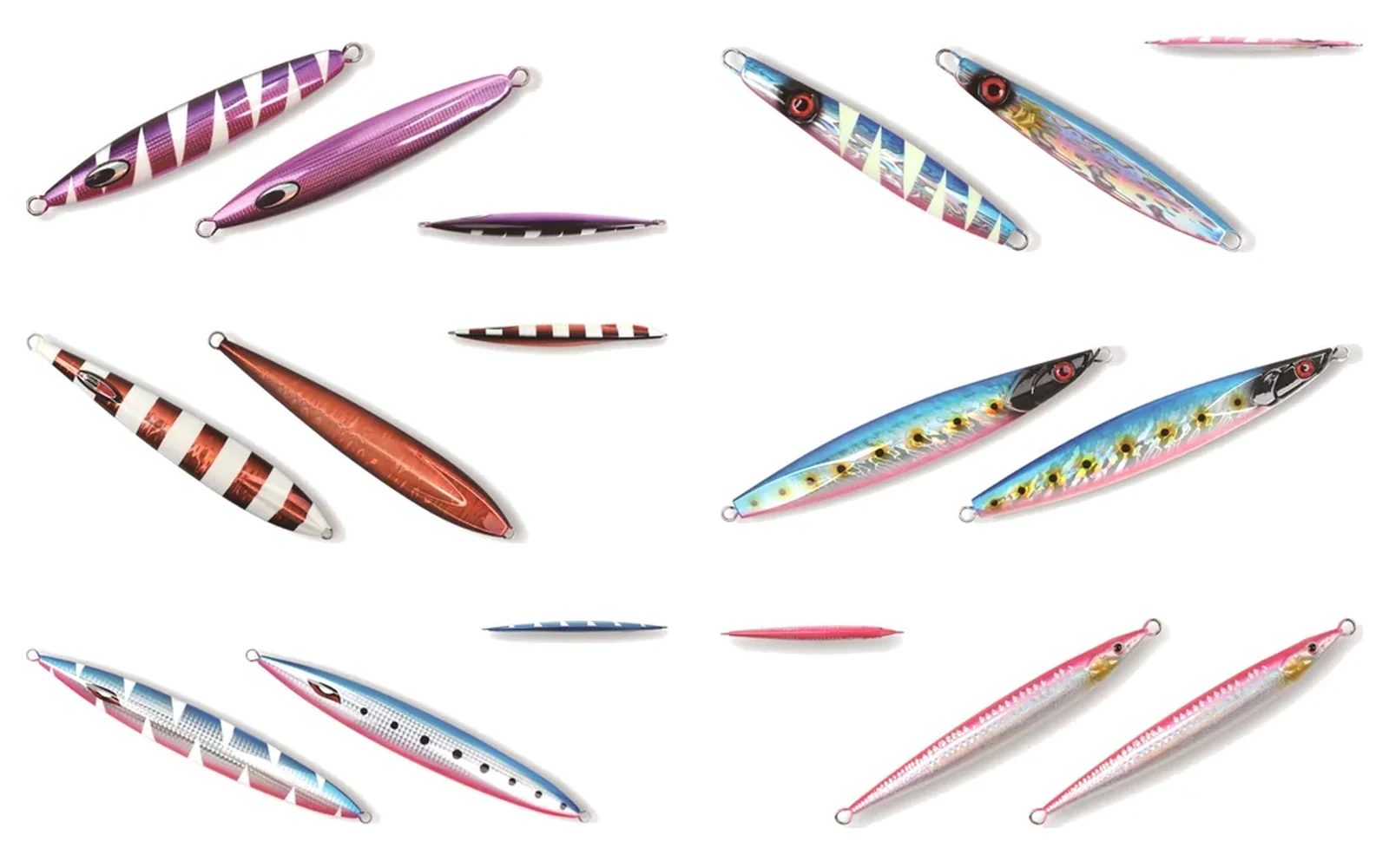
Short answer: a simple starting rule is 1 to 1.5 g of jig per meter of depth in light current, rising to 2 to 3 g per meter in strong current or wind drift. So 60 m of water calls for about 60 to 100 g on a calm day and 150 to 200 g when the current runs. Thinner PE line lets you go lighter, because thin line has less drag in the current.
Jig weight chart
| Depth | Light current | Medium current | Strong current |
|---|---|---|---|
| 10 to 20 m | 20 to 40 g | 30 to 60 g | 60 to 80 g |
| 20 to 40 m | 40 to 60 g | 60 to 100 g | 100 to 150 g |
| 40 to 60 m | 60 to 100 g | 100 to 150 g | 150 to 200 g |
| 60 to 100 m | 100 to 150 g | 150 to 250 g | 250 to 350 g |
| 100 to 150 m | 150 to 250 g | 250 to 350 g | 350 to 500 g |
| 150 to 300 m | 300 to 400 g | 400 to 600 g | 600 g and over |
This is a starting point: the right jig is the lightest one that still reaches the bottom quickly and lets the angler feel it. If the line runs out at a steep angle, go heavier; if the jig hits bottom at once and feels dead, go lighter.
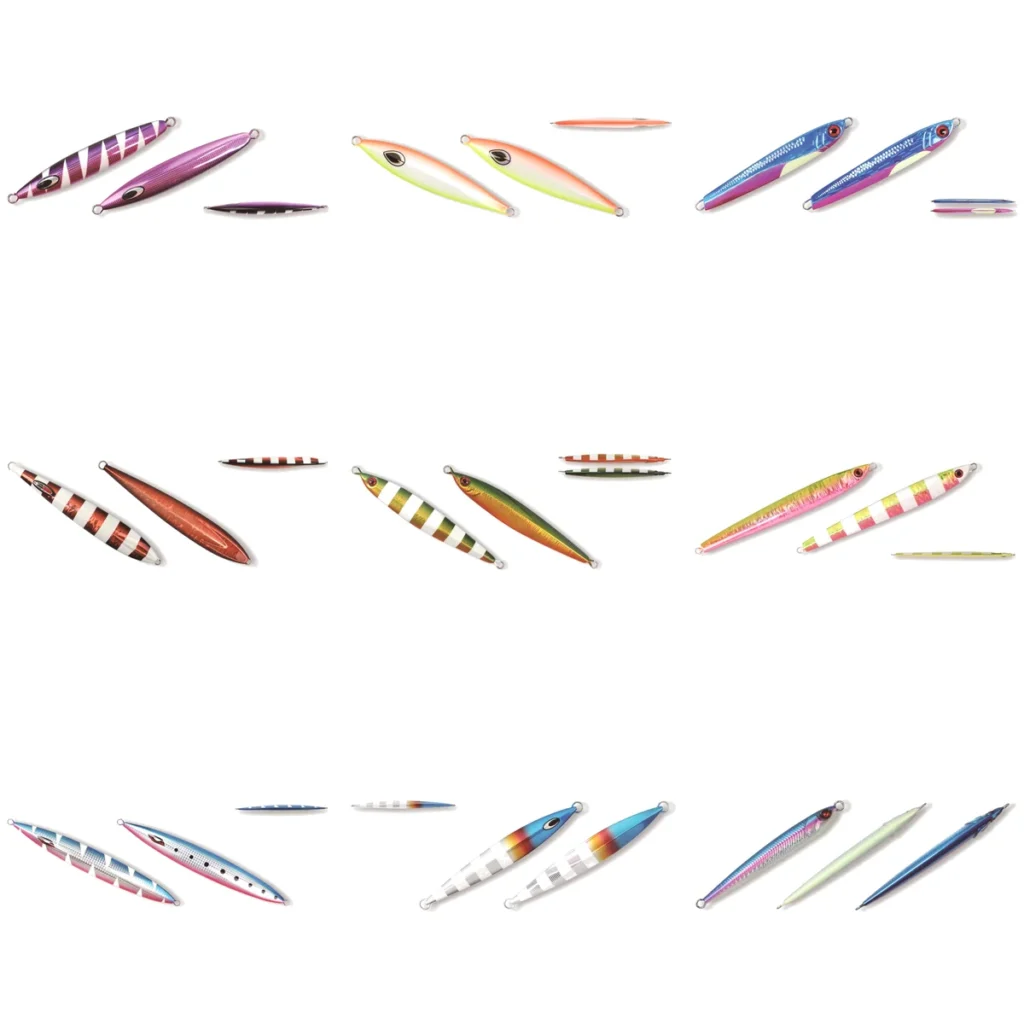
How line size changes the weight
| PE line | Leader | Effect on jig weight |
|---|---|---|
| PE 0.8 to 1.5 | 16 to 30 lb | Lowest drag: about 20 to 30% lighter jigs than the chart |
| PE 2 to 3 | 30 to 60 lb | Use the chart |
| PE 4 to 8 | 60 to 150 lb | More drag: about 20 to 50% heavier jigs |
See also how to choose PE braided line and our fluorocarbon leader guide.
Shape matters as much as weight
- Slim, tail-weighted jigs sink fastest and hold in strong current at a lower weight.
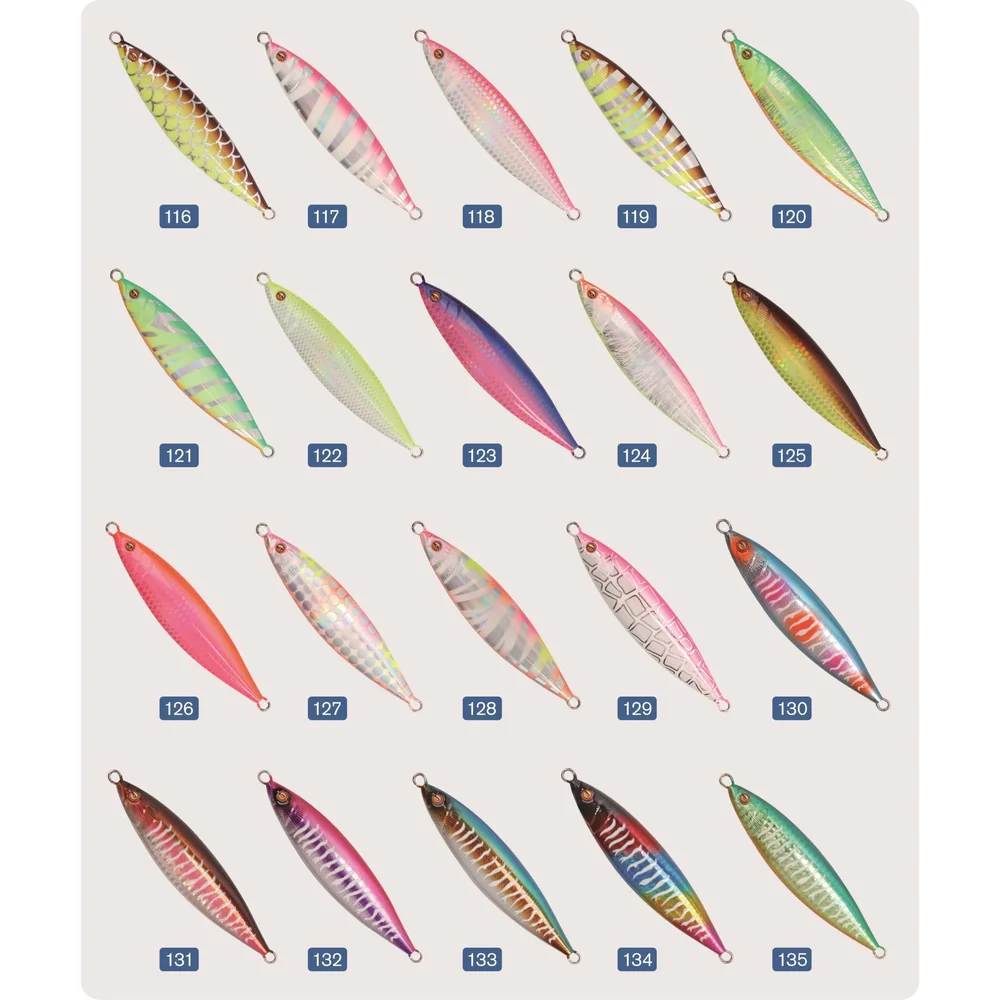
- Wide, flat slow pitch jigs sink slowly, so they need about 20 to 30% more weight for the same depth.
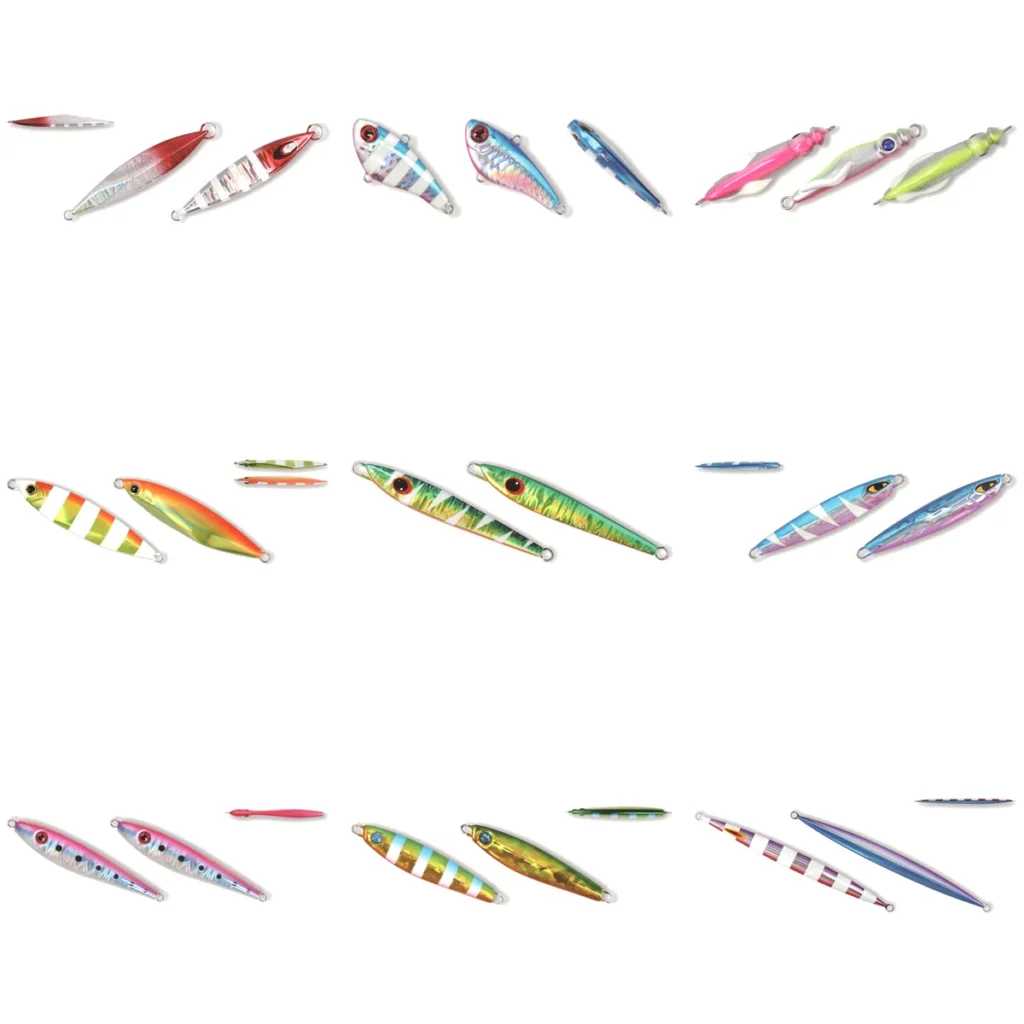
- Shore casting and micro jigs (7 to 60 g) are compact and casting-weighted, built for distance rather than depth.
Which weights to stock
| Market | Core weights | Notes |
|---|---|---|
| Shore casting | 20, 30, 40, 60 g | Mackerel, bonito, tailor, sea bass, small tuna |
| Inshore boat | 60, 80, 100, 150 g | Snapper, kingfish, amberjack on shallow reefs |
| Offshore and deep | 200, 250, 300, 400 g | Amberjack, grouper, tuna, deep reefs |
| Deep drop and strong current | 500 to 800 g | Special orders; small quantities |
Australian buyers often ask for 60 to 250 g jigs for kingfish and snapper and 20 to 40 g casting jigs for tailor and bonito; US Gulf and Atlantic buyers use 150 to 300 g for amberjack and grouper.
FAQ
Should jig weight change with the tide?
Yes. Many anglers carry the same jig in two or three weights and change as the current speeds up or slows down around the tide change.
Do heavier jigs catch bigger fish?
Not by themselves. Weight is about reaching the fish; the size of the jig profile and the action matter more to the fish.
Can you make jigs in weights that are not listed?
Yes. Most of our molds are made in a series of weights, and new weights can be added to an existing shape.
Related products
- Semi-long metal jigs 20 to 800 g
- Micro and shore casting jigs
- Slow pitch jigs
- Long speed jigs
- Tai rubber and inchiku jigs
- Jig paint colors and finishes
Choosing between styles? Read slow pitch vs speed jigging.