
How to Source Jointed Swimbaits: Sections, Sizes, Joints and Paint Explained
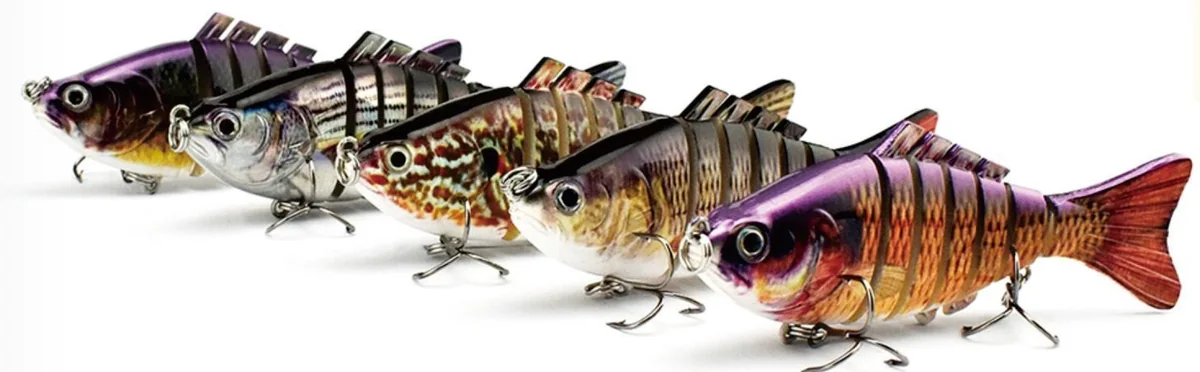
Short answer: choose the number of sections for the action you want (two sections for a wide glide, four to eight for a tight, snake-like swim), match length and weight to the target fish, and check three things on every sample: joint strength, swimming balance and paint durability. Start a range with 3 to 5 proven profiles such as bluegill, shad and trout in two sizes each, then add colors that suit your market.
Sections and action
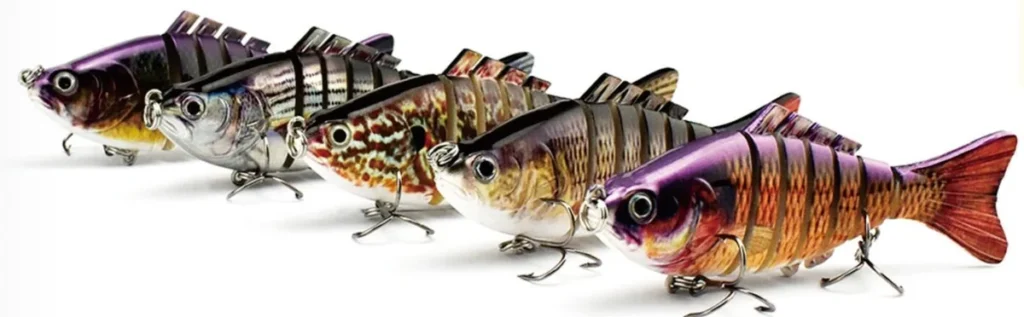
The number of body sections changes how a swimbait moves. This is the first decision because it decides which anglers will buy the lure.
| Sections | Action | Typical use |
|---|---|---|
| 2 (glide bait) | Wide side-to-side S-glide on a slow retrieve | Big bass, striped bass and pike; sight fishing and slow rolling |
| 3 to 4 | Natural tail kick with some body roll | All-round bass, pike and sea bass swimbait |
| 6 to 9 | Snake-like swim even at very slow speed | Pike, musky, loach and needlefish imitations; finesse swimbait fishing |
Sizes and weights by species
| Target fish | Common length | Common weight |
|---|---|---|
| Perch, trout, panfish | 80 to 110 mm | 7 to 20 g |
| Largemouth and smallmouth bass | 110 to 170 mm | 20 to 60 g |
| Trophy bass, striped bass | 150 to 200 mm | 45 to 110 g |
| Pike and musky | 150 to 250 mm | 40 to 170 g |
| Tuna, kingfish and offshore | 250 to 400 mm | 140 to 700 g |
Most series are offered in two or three sizes of the same design. Buyers who sell online often start with the middle size, then add a smaller and a larger version once the profile sells.
Joints, tails and hardware
- Steel wire or metal pin joints are the most common. Ask the factory how the wire is anchored in each section; a pull test on the first joint is a good check.
- Dyneema (UHMWPE) ribbon joints make long multi-section baits very flexible. They are light but need a good glue process.
- Tails: hard tails last longest; soft PVC tails give more kick and can be replaced; hair or fiber tails add movement on the pause.
- Hooks and rings: agree hook size and finish for each size. Many brands upgrade hooks on their premium line.
Paint and finish quality
Printed photo patterns, hand-carved scales and 3D eyes make swimbaits look real in pictures and in the shop. When you check samples:
- Look at the edges of each joint, where paint chips first.
- Scratch-test the top coat with a fingernail; good epoxy or UV coats do not mark easily.
- Compare the colors with your approved sample under daylight, not only under shop lights.
Electric and LED swimbaits
Rechargeable swimbaits with a small propeller motor, LED lights or vibration are a growing gift and online category. Ask for the battery type, charging time, working time and how the lure switches on (most start automatically in water). Battery products may need extra paperwork for air freight, so check shipping before you order.
MOQ, samples and lead time
Existing molds with stock colors are the fastest start. Custom colors usually start from about 50 pieces per color, and new molds take longer because they need design, tooling and swim tests. Order painted samples of each color before bulk production and keep one approved sample as the reference for reorders.
FAQ
Do jointed swimbaits sink or float?
Both are available. Most multi-section swimbaits are slow sinking; floating and diving-lip versions are used for shallow water and topwater wakes.
Which swimbait profiles sell best?
Bluegill and sunfish, shad, trout and perch profiles are the most popular for bass. Pike and loach shapes sell well in Europe.
Can you match a swimbait we already sell?
Yes. Send a sample or drawing; we can match size, weight and action, and paint your own pattern.