Fly Tying Vise Guide: Rotary vs Fixed, C-Clamp vs Pedestal, and the Best Vise for Beginners
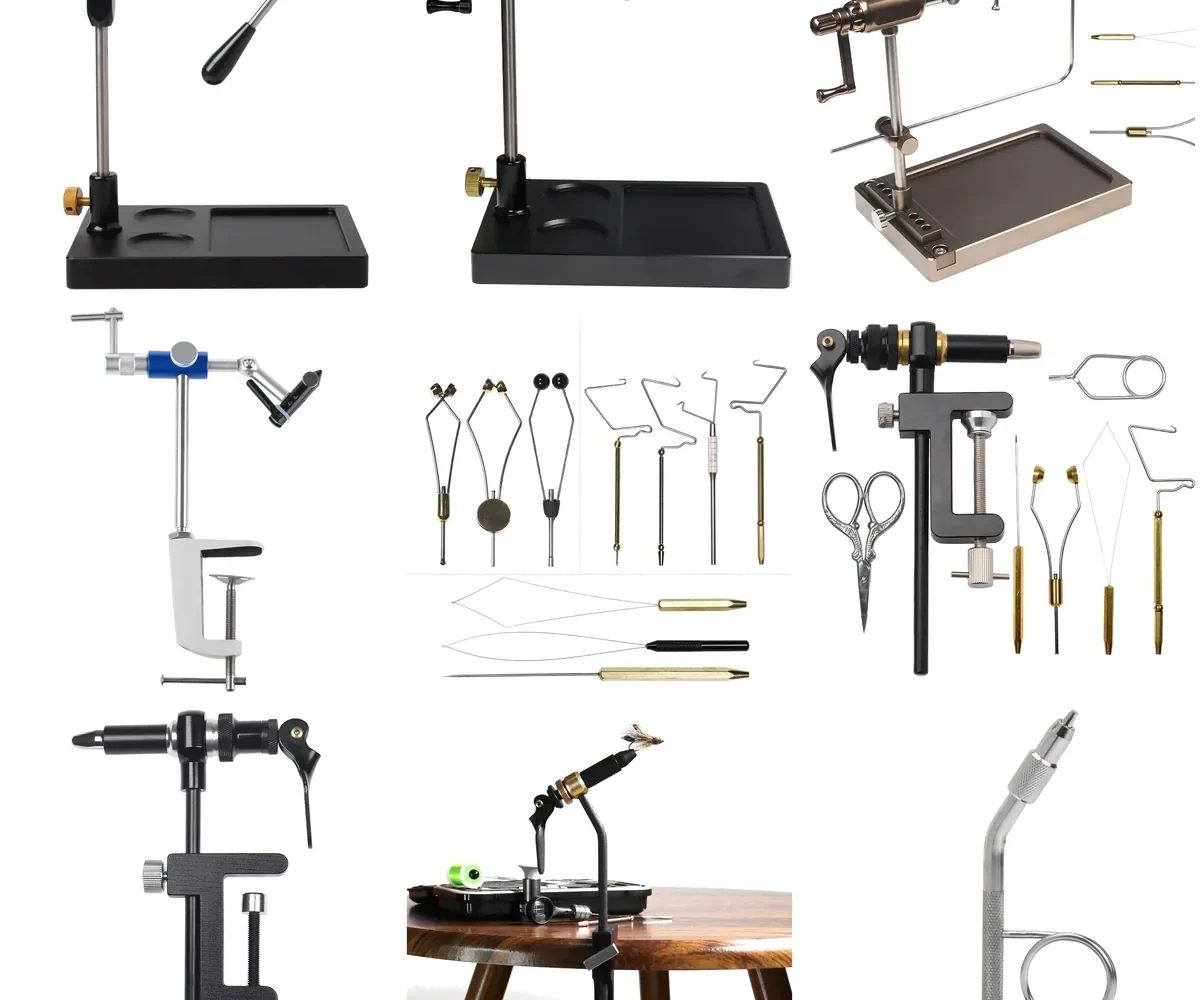
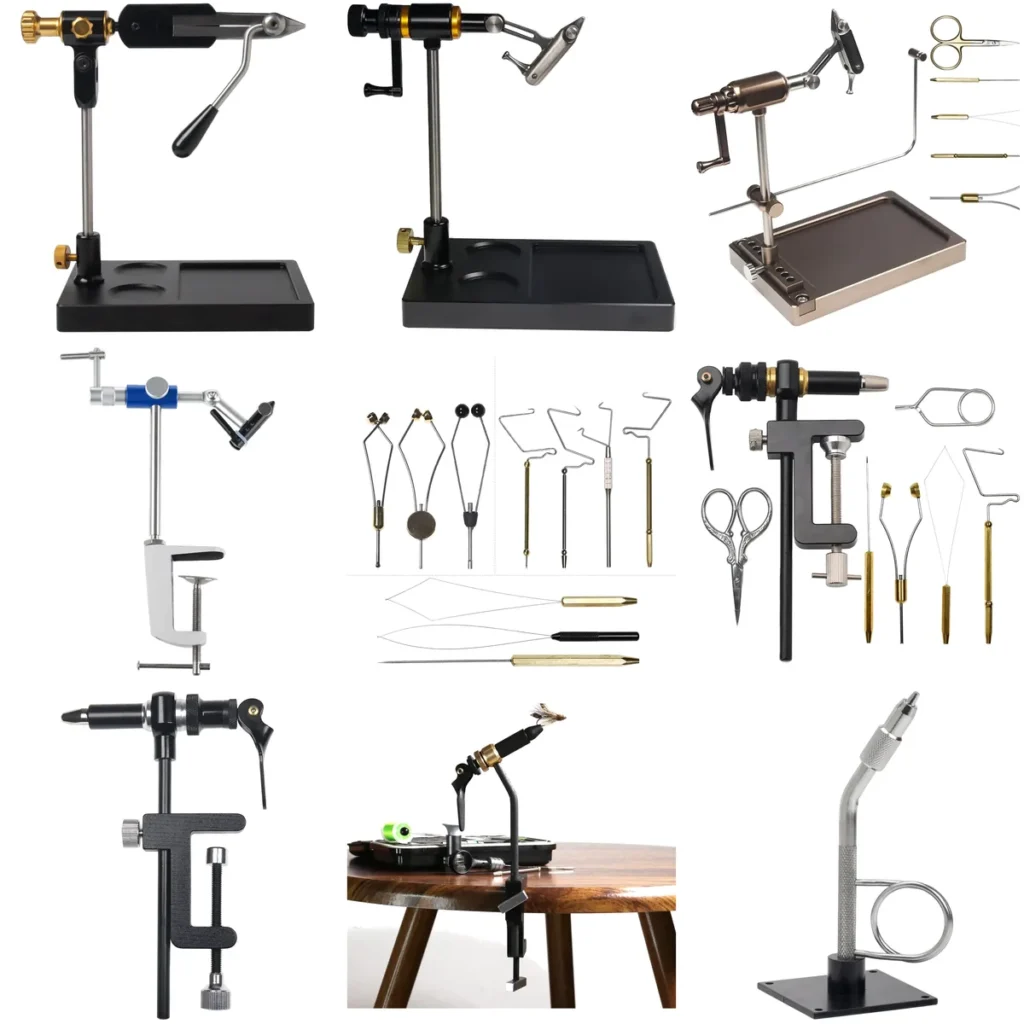
Short answer: a fixed vise holds the hook still and is the simple, low-cost choice most beginners start with. A rotary vise lets the tyer turn the fly on the hook shank axis to wrap bodies, hackle and ribbing and to check every side, and it is the vise most tyers upgrade to. Choose a pedestal base to tie on any table, or a C-clamp for the most solid hold on a desk edge. Then match the jaws to the hook sizes you tie: about #28 for midges up to 3/0 to 7/0 for saltwater and streamer flies.
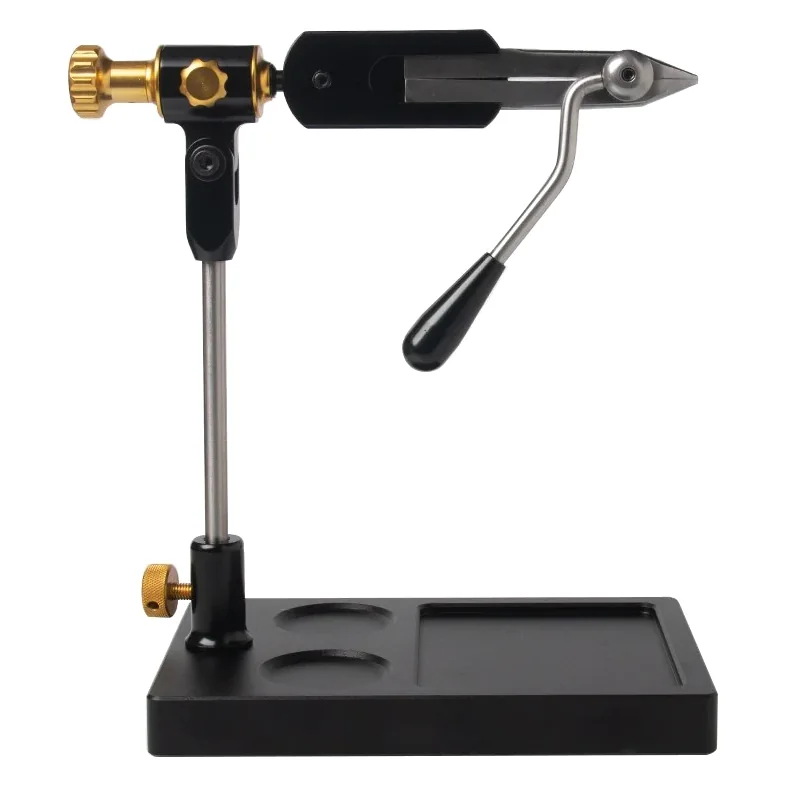
Rotary vs fixed vise
| Fixed (stationary) vise | Rotary vise | |
|---|---|---|
| How it works | Jaws hold the hook at a fixed angle | Jaws turn so the hook shank stays on the axis of rotation |
| Best for | Beginners, kits, simple trout flies | Wrapping bodies, hackle and ribbing; checking both sides |
| Price | Lowest | Mid to premium |
| Learning curve | Very easy | Easy to use as a fixed vise, rotation takes some practice |
| Who buys it | First-time tyers, gift kits, classes | Regular tyers upgrading from a kit, streamer and saltwater tyers |
Many “rotary” vises only turn the jaws for inspection. A true 360° rotary vise keeps the hook shank on the line of rotation, so materials can be wound on by turning the vise instead of moving the bobbin. Ask which type a vise is before you buy or stock it.
C-clamp vs pedestal base
- C-clamp: clamps to the edge of a desk or table. Very stable and good for heavy thread pressure, but you need a table edge 1 to 5 cm thick.
- Pedestal base: a heavy steel or brass plate that stands on any surface. Easy to move and set up; a base of about 1 kg or more stops the vise tipping when you pull hard.
- Combo: many vises come with both, so the tyer can choose at home or at a show.
Jaws and hook range
The jaws are the most important part of any vise. Hardened steel jaws hold the hook without slipping and do not wear. Check the hook range against the flies you tie:
| Flies | Hook size | What the jaws need |
|---|---|---|
| Midges and small dries | #20 to #28 | Fine, sharp jaw tips |
| Trout nymphs, dries and wets | #8 to #18 | Standard jaws; most vises |
| Streamers, bass bugs, salmon flies | #2 to 2/0 | Wider jaws and strong clamping |
| Saltwater flies and assist hooks | 1/0 to 7/0 | Wide or second jaw set; heavy base |
Hooks for each style are on our dry fly hooks, nymph hooks, jig fly hooks and streamer and salmon hooks pages.
Jig vises, travel vises and accessories
- Jig hook vise: jaws angled to hold jig hooks for Euro nymphs and jig flies, or a wide jaw for assist hooks and metal jig rigging.
- Travel vise: a mini vise of about 100 g with a small clamp or base, for trips and shows.
- Background plate: a plain plate behind the fly that makes tying easier on the eyes and gives cleaner photos.
- Tying table or station: holds the vise, tools and materials in one place; see our fly tying stations and UV lights.
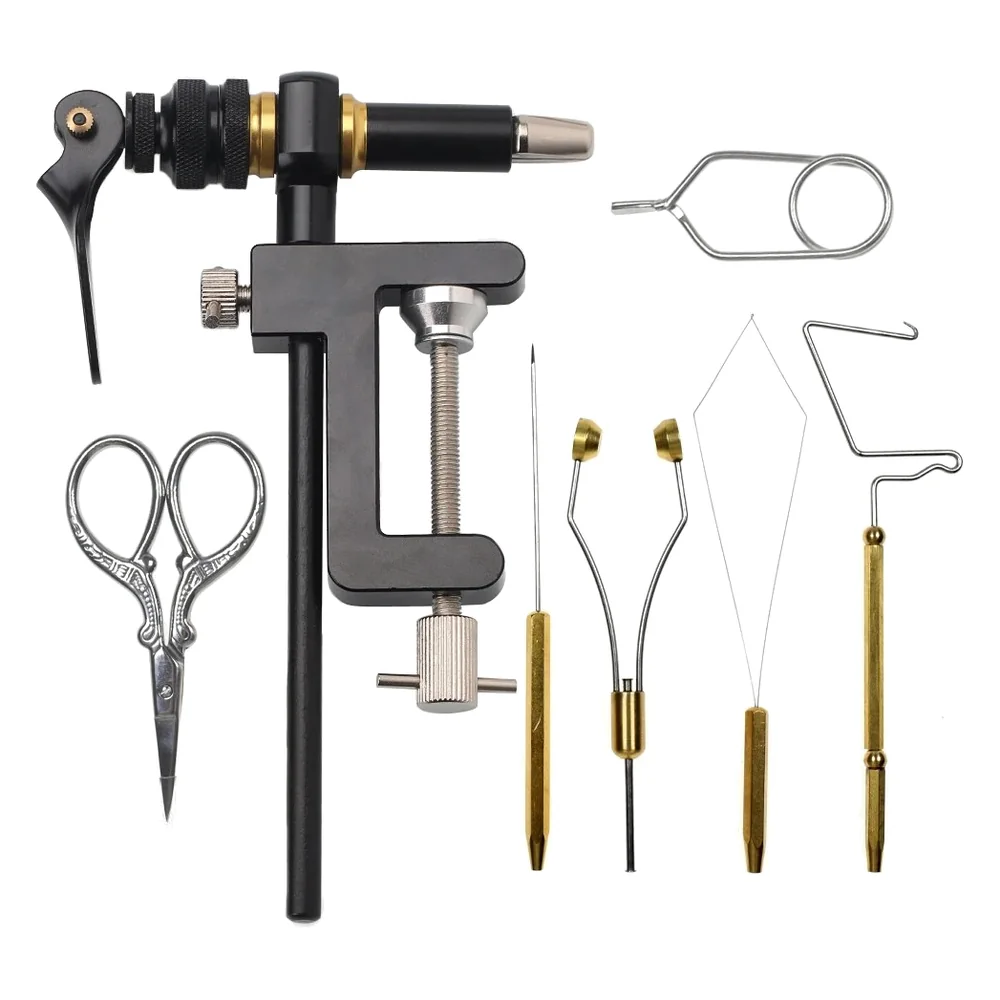
Best fly tying vise for beginners
A beginner needs a vise that holds #8 to #18 hooks firmly, is easy to set up and costs little. A fixed C-clamp vise or a simple vise in a tool kit is enough for the first year. When the tyer starts wrapping hackle and dubbed bodies, a rotary vise on a pedestal base is the natural upgrade. Add the basic tools: a bobbin and whip finisher, scissors, hackle pliers and a bodkin from our fly tying tools range, plus thread.
A vise range for a fly shop
| Level | Typical vise | Customer |
|---|---|---|
| Entry | Fixed C-clamp vise or vise in a tool kit | Beginners, gifts, tying classes |
| Mid | Rotary vise with pedestal base, C-clamp included | Regular tyers |
| Premium | True 360° rotary vise, heavy base, wide hook range | Experienced, streamer and saltwater tyers |
| Special | Jig hook vise, travel vise, background plate, tying table | Euro nymph tyers, travellers, photographers |
Three to five vises cover most shops. See all models on our fly tying vises page, and our guide to wholesale fly tying materials for the materials that sell with them.
FAQ
Is a rotary vise worth it for a beginner?
Not essential. A fixed vise ties every basic fly. A rotary vise makes wrapping bodies and hackle easier and is the usual second vise; many rotary vises also work as a fixed vise when locked.
What is the difference between a fly tying vise and a vice?
They are the same tool. “Vise” is the American spelling and “vice” the British and Australian spelling.
C-clamp or pedestal: which is better?
A C-clamp is more stable on a suitable desk; a pedestal is more flexible and works on any table. Most tyers who travel or tie at shows prefer a pedestal.
What hook sizes should a fly tying vise hold?
A general vise should hold about #24 to 2/0. Midge tyers need jaws down to #28, and saltwater tyers need up to 4/0 to 7/0.
Can I use a fly tying vise for jigs and assist hooks?
Yes, with a vise that has wide or angled jaws. Our rotary jig hook vise and assist hook vise are made for this.
Sourcing fly tying vises for your shop or brand
We supply fly shops, online sellers and private-label brands in the US, Australia and Europe from our factory in China. Vises can be anodized in your colours, laser engraved with your logo and boxed for retail or packed into tool kits. MOQ and lead time depend on the model and packaging and are confirmed in your quote; stock samples ship within 2 working days after payment. Send us your list for a quote.