Braid vs Mono vs Fluorocarbon: Which Fishing Line Should You Use?
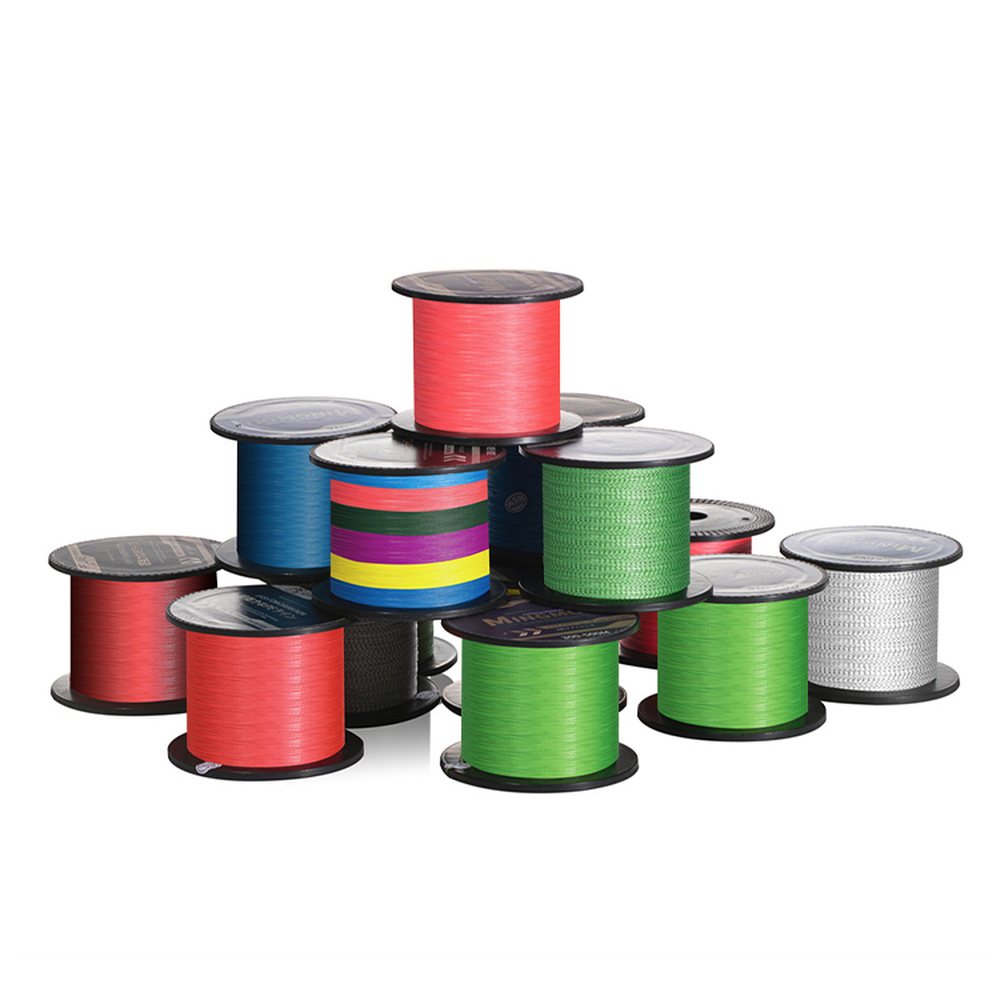
Short answer: use braid when you need casting distance, sensitivity and strength in a thin line (spinning reels, lure fishing, deep water, heavy cover). Use monofilament when you want stretch, low price and easy handling (topwater, crankbaits, catfish and general bait fishing). Use fluorocarbon when the fish can see the line or you need abrasion resistance near the lure (leaders, clear water, finesse and jig fishing). Most lure anglers run braid as the main line with a fluorocarbon leader.
Fishing line size converter
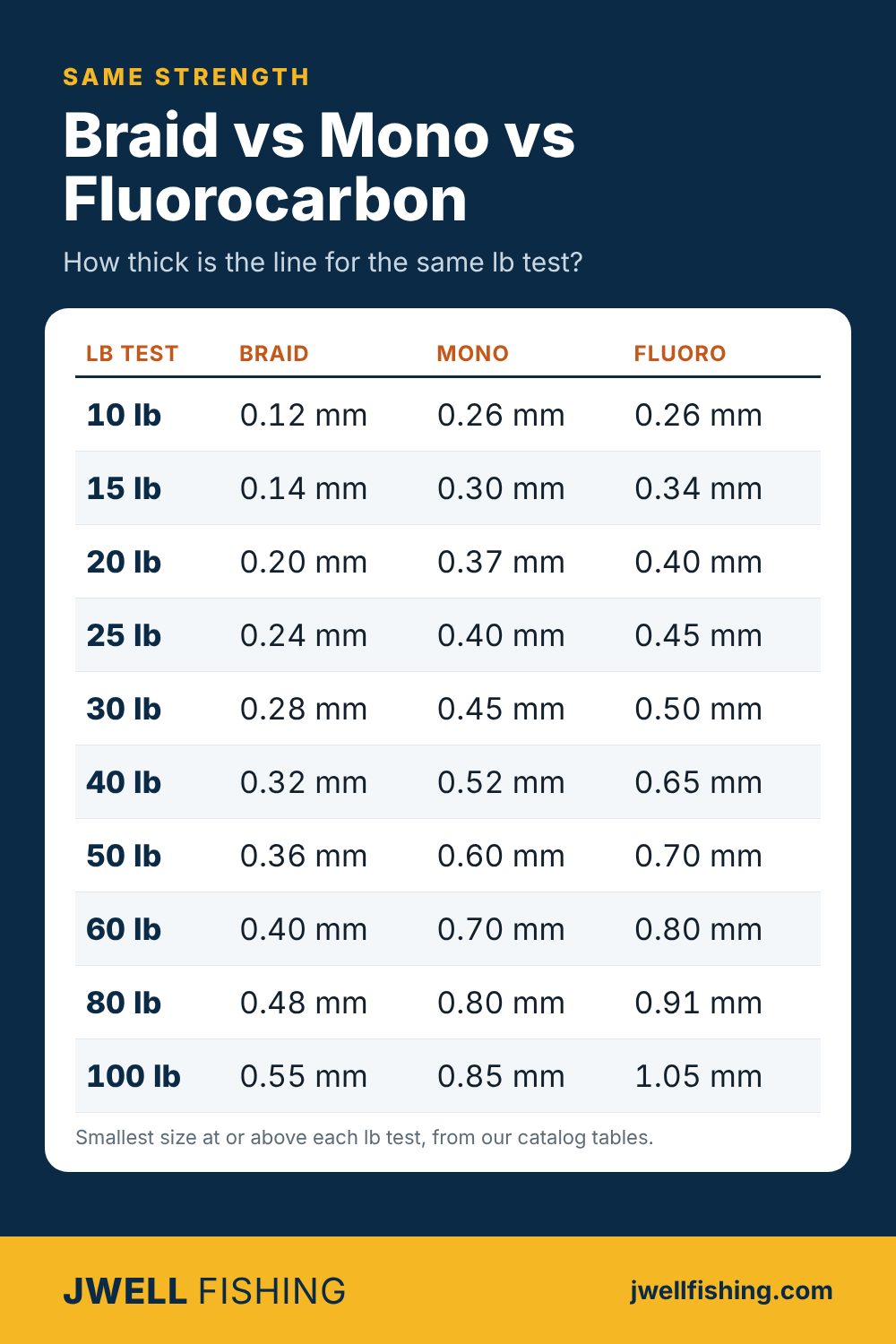
Choose a line and a size to see breaking strength and diameter, or enter a pound test or a diameter to find the size. You also see the same strength in the other line types. Values are from our own catalog tables.
Side by side
| Braid (PE) | Monofilament (nylon) | Fluorocarbon | |
|---|---|---|---|
| Diameter for about 20 lb | About 0.18–0.20 mm (PE 1.2–1.5) | About 0.35–0.37 mm | About 0.38–0.40 mm |
| Stretch | Almost none (around 3–5%) | High (15–25%) | Medium (lower than mono) |
| Sensitivity | Best | Lowest | Good |
| Visibility in water | Most visible | Low to medium | Lowest; refracts light close to water |
| Floats or sinks | Floats (sinking braid exists) | Floats slowly / near neutral | Sinks, about 4 times faster than nylon |
| Abrasion resistance | Good on open water, cuts on rock edges | Medium | Best |
| Memory | Very low | Low to medium | Higher, stiffer |
| Knots | Needs braid knots (FG, double uni, Palomar) | Easy | Moisten and tighten slowly |
| Price | Medium to high | Lowest | Highest per metre |
Diameters are typical values from our own size tables: PE braid in our X8 braid range, nylon in our monofilament tables and our fluorocarbon line.
Braided line: when to use it
- Long casts with spinning reels: a thin braid flows off the spool with less friction.
- Feeling bites on soft plastics, jigs and in deep water: no stretch means every touch reaches the rod.
- Heavy cover: frogs, punching mats and pulling fish out of weed, where 50 to 65 lb braid cuts through vegetation.
- Offshore jigging and big fish, where you need lots of strong line on the reel.
Downsides: it is visible, it can dig into itself on the spool, and it can slip on the spool if you do not use mono backing or tape. In clear water add a leader. See how to choose PE braid and the PE line size chart.
Monofilament: when to use it
- Treble-hook lures like crankbaits and topwater, where stretch stops hooks pulling out.
- Bait fishing and catfish with circle hooks, which need a little stretch to set.
- Beginners and kids: easy to tie, cheap, forgiving.
- Backing under braid and for float and rock fishing (see our semi-float rock fishing line).
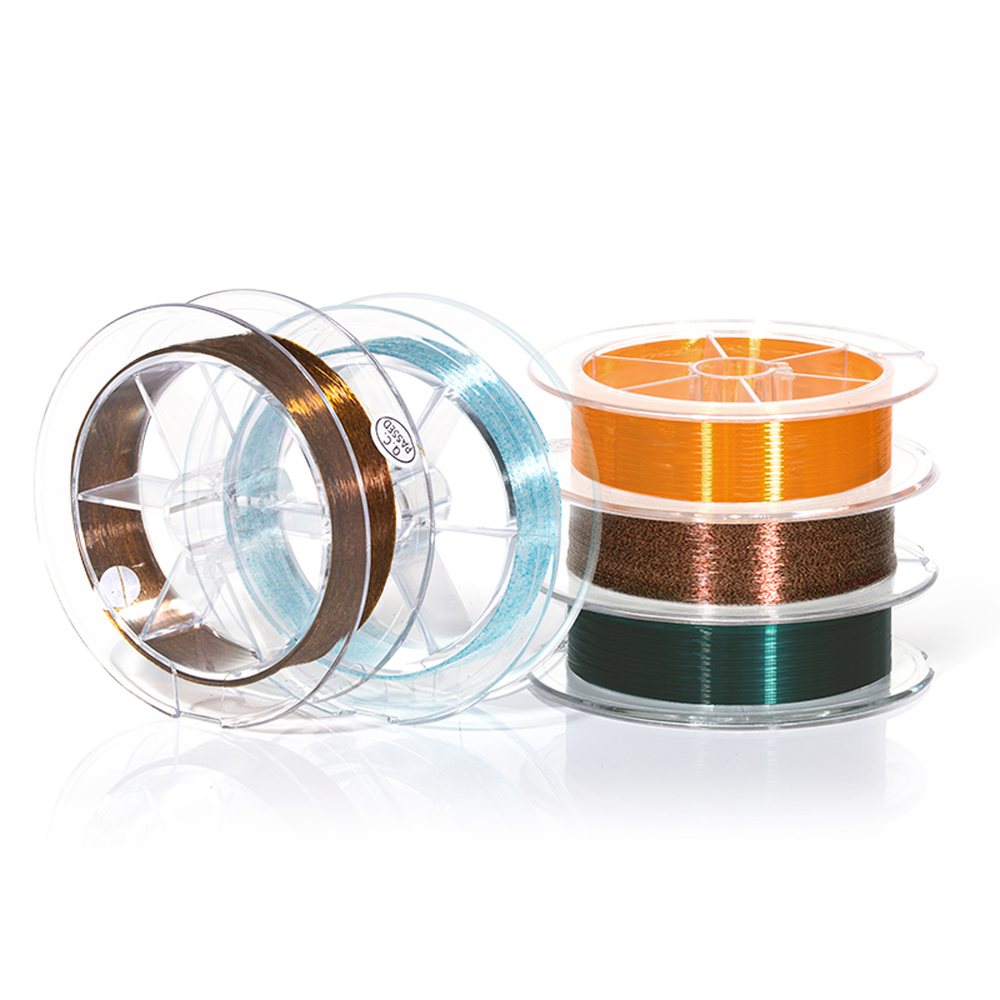
Fluorocarbon: when to use it
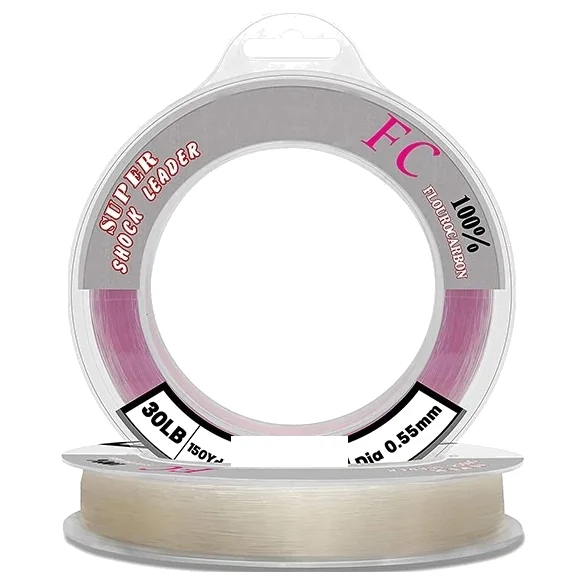
- Leaders on braid: low visibility and high abrasion resistance where the fish and the structure are.
- Clear water and pressured fish, for finesse rigs, drop shots and jigs.
- Sinking presentations: it sinks, so jigs, crankbaits and Texas rigs get down and stay down.
Downsides: stiffer and more expensive; knots must be wetted and tightened slowly. Leader sizes are covered in our fluorocarbon leader guide.
Best line by type of fishing
| Fishing | Main line | Leader |
|---|---|---|
| Bass, soft plastics and jigs | 10–20 lb braid or 10–17 lb fluorocarbon | 8–15 lb fluorocarbon |
| Bass, frogs and heavy cover | 50–65 lb braid | None |
| Bass, crankbaits and topwater | 10–17 lb mono or fluorocarbon | None |
| Inshore (redfish, trout, snook) | 10–20 lb braid | 15–30 lb fluorocarbon |
| Bream, flathead, whiting (Australia) | PE 0.4–1.0 braid | 4–12 lb fluorocarbon |
| Surf and beach | 15–30 lb braid or 15–25 lb mono | 20–40 lb mono or fluorocarbon |
| Catfish | 20–50 lb mono or 30–65 lb braid | 30–60 lb mono leader |
| Trout and panfish | 2–6 lb mono or fluorocarbon | Optional |
| Offshore jigging | PE 2–8 braid | 40–100 lb fluorocarbon |
Speciality lines
- Fluorocarbon-coated nylon: nylon core with a fluorocarbon coating, lower visibility at a nylon price.
- 3D spotted camo nylon: broken-up colour that blends into the water.
- Sinking braid: braid that lies on the bottom for carp, feeder and catfish rigs.
- Fadeless braid: colour-locked dyeing that keeps its colour.
FAQ
Is braid better than mono?
For lure fishing, distance and sensitivity, yes. For treble-hook lures, circle-hook bait fishing and beginners, mono is often better because it stretches.
Do I need a leader with braid?
In clear water and around rocks, yes. A 1 to 3 metre fluorocarbon leader is less visible and more abrasion resistant than braid.
Is fluorocarbon invisible to fish?
Not invisible, but its refractive index is close to water, so it is much harder to see than mono or braid.
What line should a tackle shop stock?
Braid in PE 0.6 to 4 (10 to 50 lb), mono in 4 to 30 lb and fluorocarbon leader in 6 to 40 lb cover most customers in the US and Australia.
Sourcing this tackle for your store or brand
We supply US tackle shops, online sellers and private-label brands from our factory in China. Soft plastics start from 3,000 pcs per size per color, hard lures from 500 pcs per size per color, private-label fishing line from 50 spools; MOQ for terminal tackle, floats and weights is confirmed in your quote. Stock samples ship within 2 working days after payment, and we quote EXW, FOB, CIF or DDP to the US. Send us your list for a quote.
More on this topic: Fishing line guide: braid, mono and fluorocarbon.