Slow Pitch vs Speed Jigging: How to Choose Jigs, Rods and Line
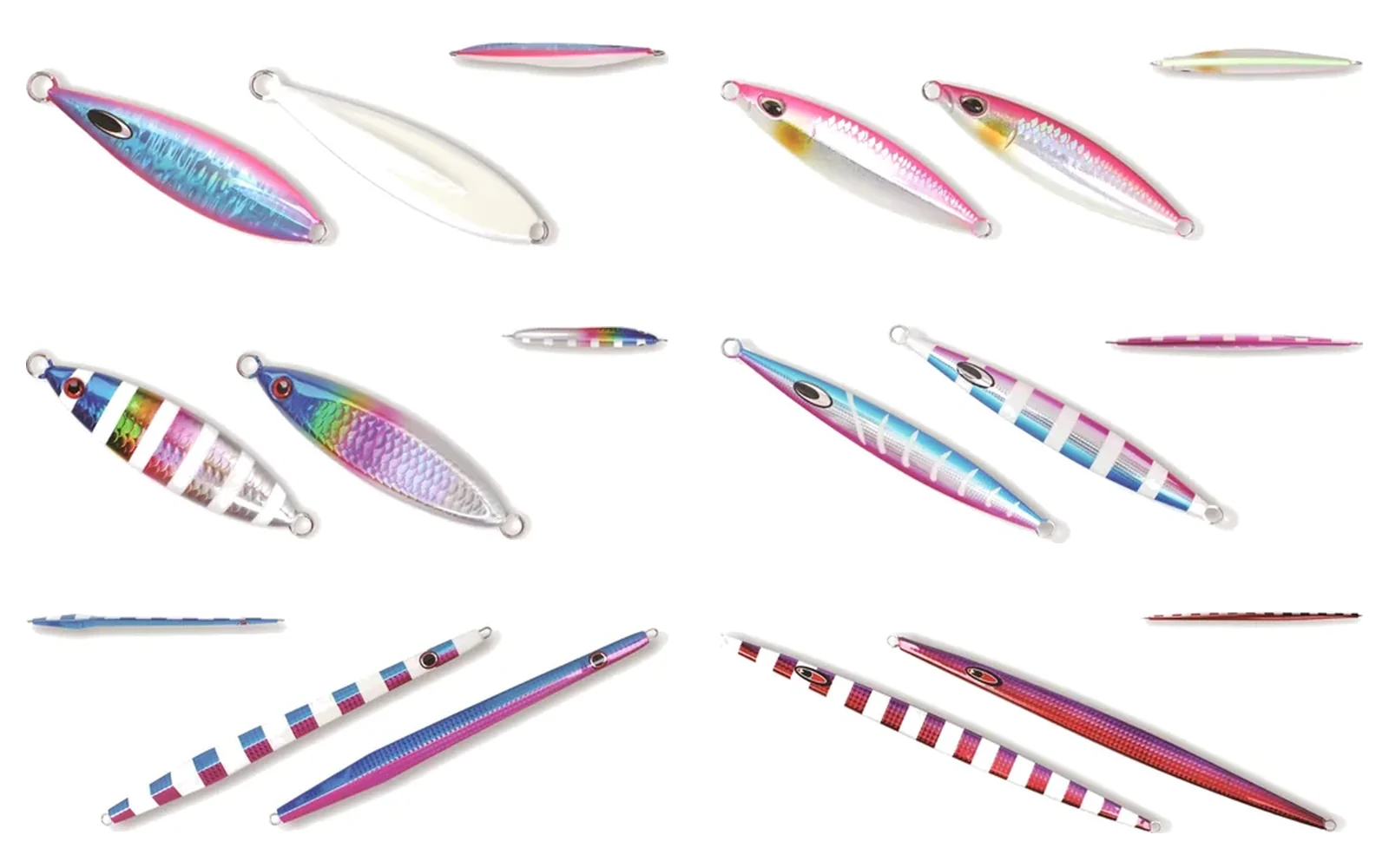
Short answer: speed jigs are long, slim and usually tail- or center-weighted. They are worked fast with long sweeps and a quick retrieve, so the jig darts up through the water and triggers fast predators like tuna, amberjack and kingfish. Slow pitch jigs are short, wide and flat or leaf-shaped. They are lifted with short pitches of the rod and then flutter and glide on the fall, which is when most fish bite. They work for bottom fish such as grouper, snapper and amberjack and for fish that will not chase a fast lure.
Side by side
| Slow pitch jigs | Speed jigs (long jigs) | |
|---|---|---|
| Shape | Short, wide, flat, leaf or asymmetric | Long and slim, knife or stick |
| Balance | Center or rear-center weighted | Center or tail weighted |
| Action | Flutters, rolls and glides on the fall | Darts upward, cuts through current |
| Rod work | Short pitches, the rod does the work | Long, fast sweeps and quick cranking |
| Typical weights | 80 to 400 g | 100 to 400 g (long jigs up to 600 g) |
| Target fish | Grouper, snapper, amberjack, rockfish, sea bream | Tuna, amberjack, kingfish, GT, dogtooth |
| Rod | Slow pitch rod, soft tip, strong butt | Fast jigging rod, PE 3 to PE 10 |
| Line | PE 1.5 to 3, 30 to 60 lb leader | PE 3 to 8, 60 to 150 lb leader |
How slow pitch jigs work
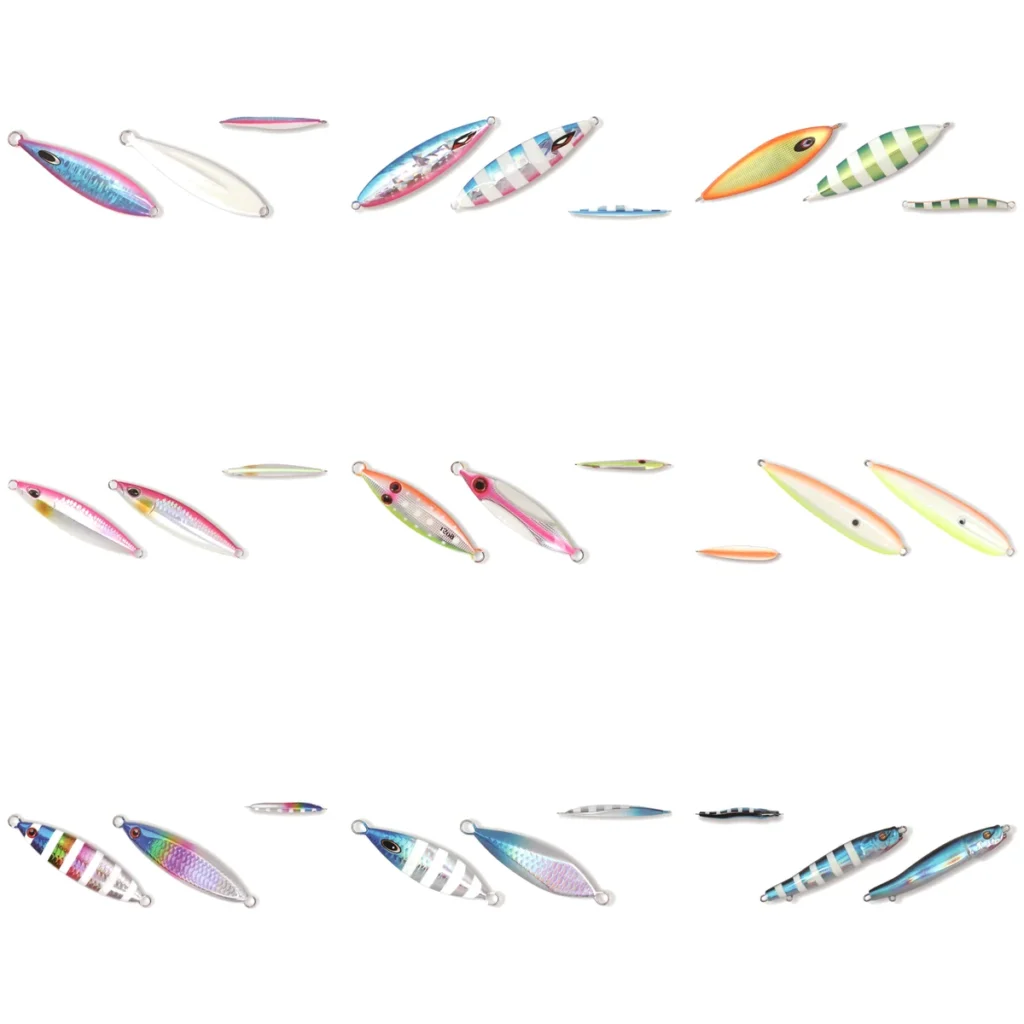
The angler lifts the rod a short way and makes a quarter or half turn of the reel. The rod tip throws the jig up, then the jig turns flat and flutters down on a slack line. Flat sides give a slow, wide flutter for shallow water and slow current; thicker, rounder jigs fall faster for deep water. Glow and UV paint helps below 50 m.
How speed jigs work
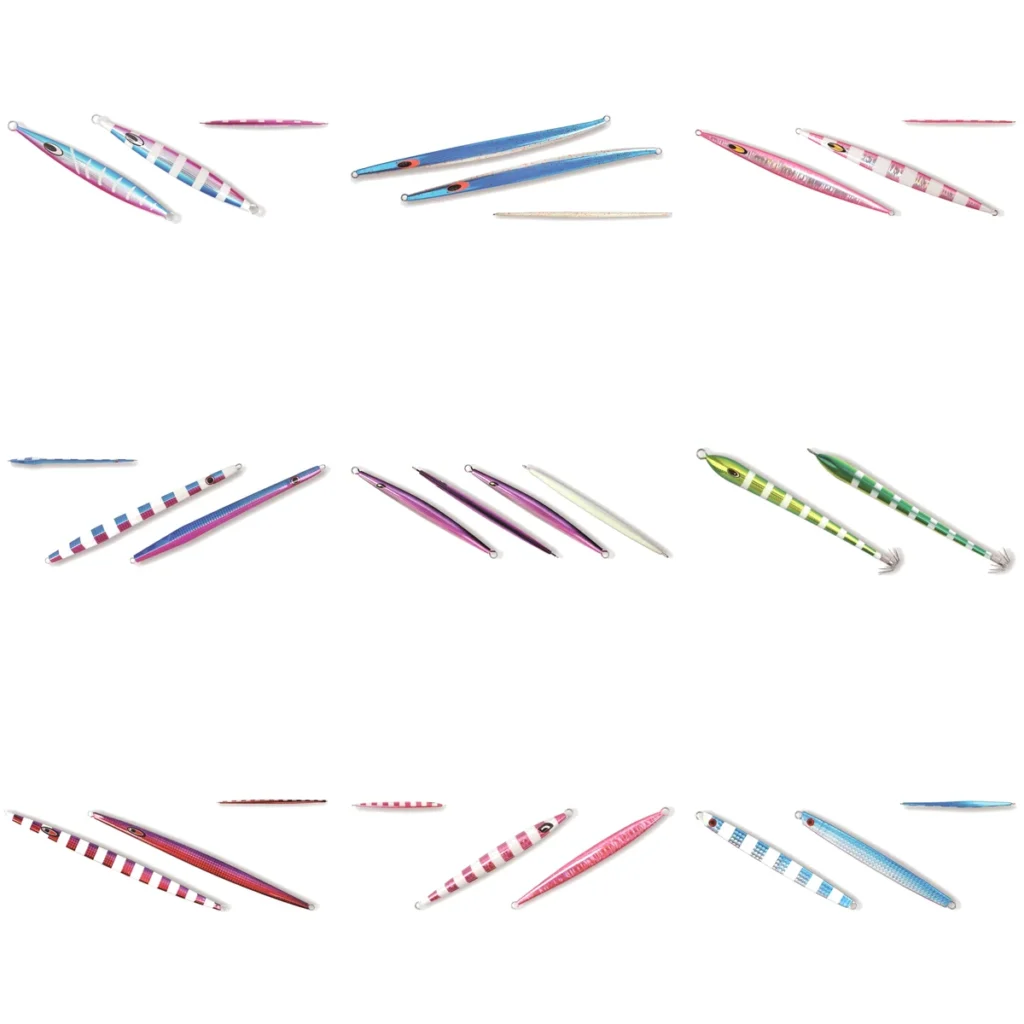
The angler works the rod in long, fast strokes while cranking, so the jig darts and slides up through the water column. A slim, tail-weighted jig drops fast to deep water and keeps its action in strong current. Holographic and laser finishes imitate baitfish flashing in the light.
Hooks and rigging
- Slow pitch: assist hooks at both ends, short (2 to 3 cm) cords, because fish often take the jig across the body on the fall.
- Speed jigging: one or two assist hooks on the top only, with longer cords, so the hooks do not foul the leader during fast strokes.
- Use solid rings and split rings rated above the leader strength.
Planning a jig range for a shop or brand
- Pick two or three shapes per style rather than many: one flat slow pitch jig, one rounder deep-water slow pitch jig, one long speed jig.
- Stock weights by local depth: 80 to 200 g for most inshore reefs, 200 to 400 g for deep water and strong current.
- Offer 6 to 10 colors: pink, silver, blue/silver, green gold, and at least two glow or UV patterns.
- Sell the matching rods, PE line and assist hooks; jigging customers often buy a full setup.
FAQ
Can one jig do both styles?
Semi-long, center-weighted jigs work well with both slow pitch and faster jerks, which makes them a good all-round choice for a small range.
Do Australian anglers prefer slow pitch or speed jigs?
Both are popular. Kingfish and amberjack anglers often use speed jigs and long jigs, while snapper and reef anglers like slow pitch jigs and micro jigs.
Can you make jigs in our own colors and shapes?
Yes. Custom colors start from small quantities per color on existing molds, and we can make new molds to your drawing or sample.