Fluorocarbon Leader Line Guide: Diameter, Breaking Strength and How to Choose
Short answer: fluorocarbon is used as a leader because it is hard to see under water, very abrasion resistant and sinks. Anglers tie 1 to 3 meters of fluorocarbon to a braided main line, so they get the sensitivity of braid with an almost invisible, tough link to the lure or hook. Choose the leader by the fish and the cover: about the same breaking strength as the braid in open water, and heavier around rocks, reefs and teeth.
Why fluorocarbon works as a leader
- Low visibility: its refractive index (about 1.42) is close to water (1.33), closer than nylon (about 1.53), so it reflects less light.
- Abrasion resistance: it is harder than nylon and survives rubbing on rocks, shells, mouths and gill plates better.
- Sinks: with a density of about 1.78, it pulls the lure down slightly and keeps the leader straight.
- Does not absorb water: its strength and stretch stay the same after hours in the water and it does not weaken in sunlight like nylon.
Diameter and breaking strength chart
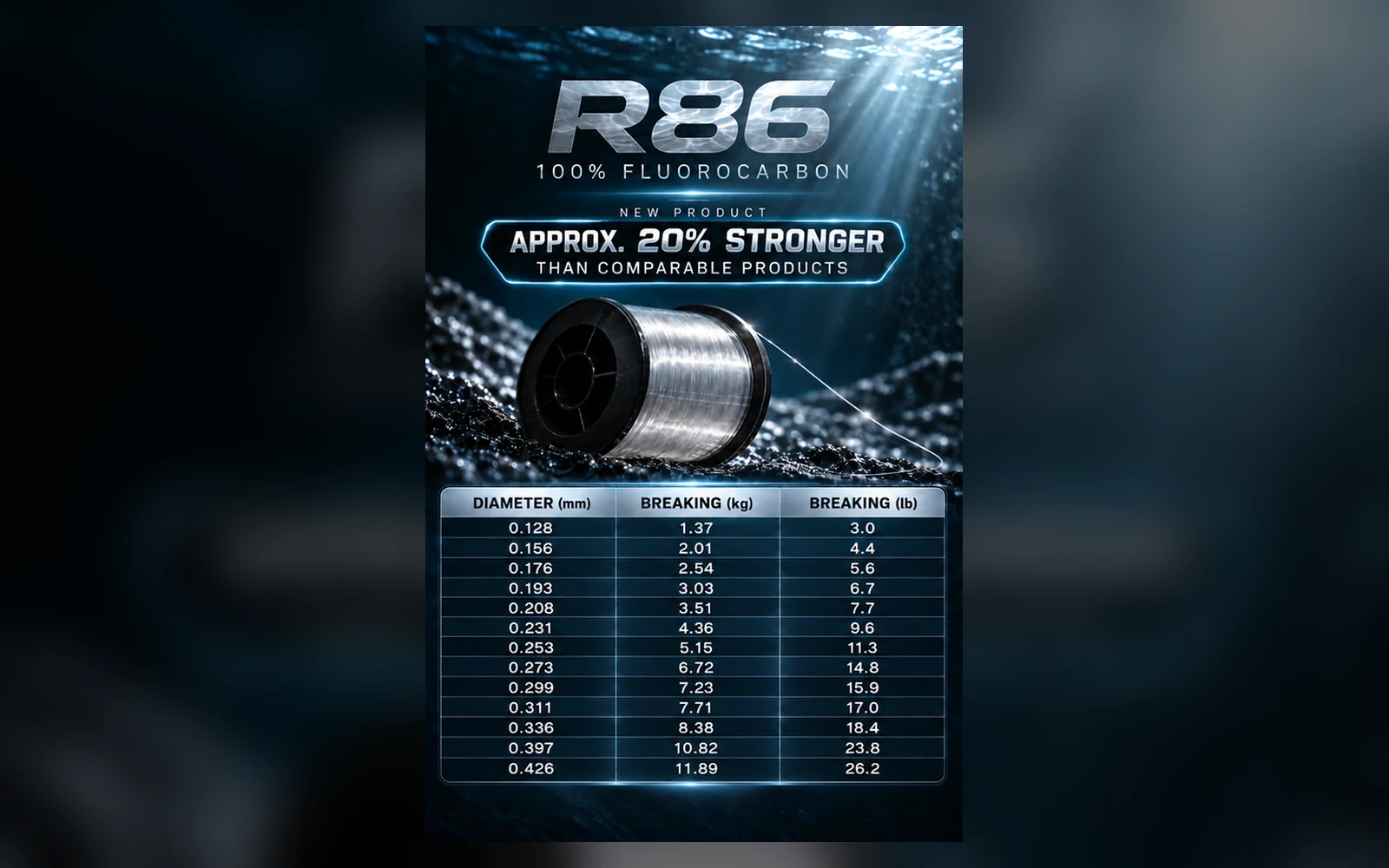
The chart below is for our 100% fluorocarbon line R86. Use it to compare with the line you buy now: at the same diameter, a higher breaking strength means you can fish thinner and less visible.
| Diameter (mm) | Breaking strength (kg) | Breaking strength (lb) |
|---|---|---|
| 0.128 | 1.37 | 3.0 |
| 0.156 | 2.01 | 4.4 |
| 0.176 | 2.54 | 5.6 |
| 0.193 | 3.03 | 6.7 |
| 0.208 | 3.51 | 7.7 |
| 0.231 | 4.36 | 9.6 |
| 0.253 | 5.15 | 11.3 |
| 0.273 | 6.72 | 14.8 |
| 0.299 | 7.23 | 15.9 |
| 0.311 | 7.71 | 17.0 |
| 0.336 | 8.38 | 18.4 |
| 0.397 | 10.82 | 23.8 |
| 0.426 | 11.89 | 26.2 |
Choosing the leader
| Fishing | Main line | Fluorocarbon leader | Leader length |
|---|---|---|---|
| Trout, perch, finesse bass | PE 0.4 to 0.8 | 0.15 to 0.21 mm (2 to 4 kg) | 1 to 2 m |
| Bass, zander, light saltwater | PE 0.8 to 1.5 | 0.25 to 0.33 mm (5 to 8 kg) | 1 to 2 m |
| Sea bass, snapper, inshore | PE 1.0 to 2.0 | 0.33 to 0.43 mm (8 to 12 kg) | 1.5 to 3 m |
| Jigging and offshore | PE 2 to 6 | 0.50 to 1.0 mm (30 to 100 lb) | 3 to 10 m |
Use a knot designed for braid to fluorocarbon, such as the FG knot or a double uni knot, and wet the knot before tightening. Fluorocarbon is stiffer than nylon, so the softer grades are better for small lures and finesse rigs.
What to check when you buy fluorocarbon
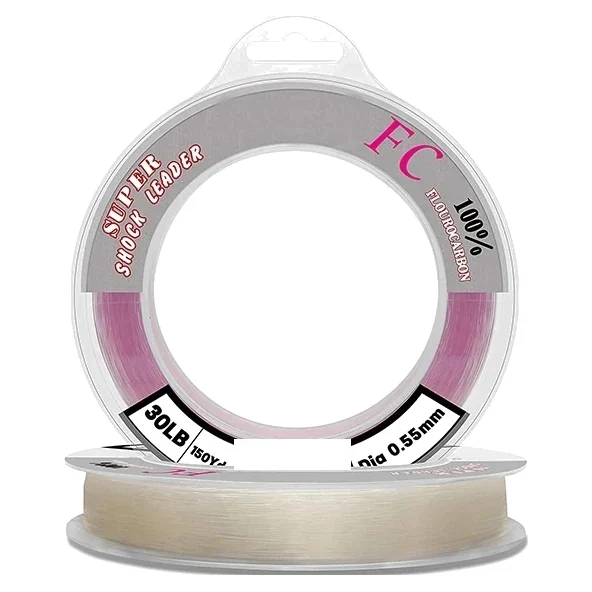
- 100% fluorocarbon or coated nylon: fluorocarbon-coated nylon is cheaper and floats or sinks like nylon. A simple test: 100% fluorocarbon sinks in water at once.
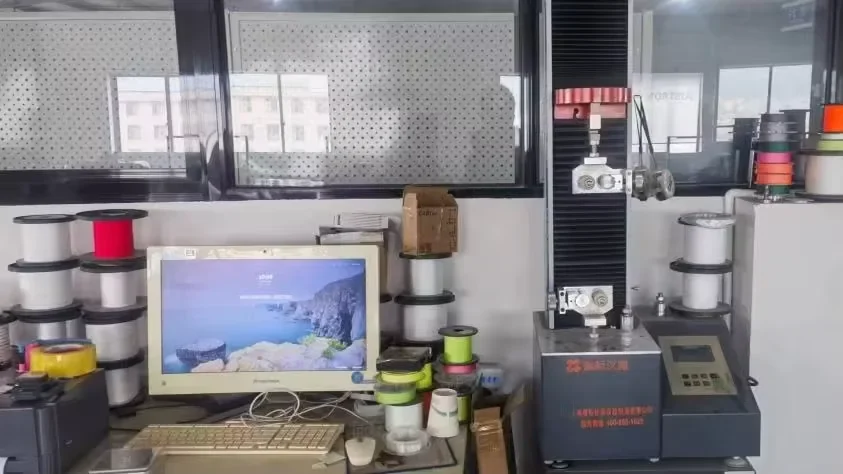
- Real diameter: measure with a micrometer at several points; the tolerance should be within about ±0.005 mm.
- Knot strength: test with the knot your customers use; good fluorocarbon keeps 80 to 90% of its straight strength.
- Memory: unwind 1 m from the spool and see how much it curls.
FAQ
Is fluorocarbon good as a main line?
For bait-casting bass rods and some finesse fishing, yes. On spinning reels it can be stiff, so most anglers use braid as the main line and fluorocarbon as the leader.
Why is the chart in kg and lb?
Asian and European anglers buy by diameter and kg; US anglers buy by lb test. Printing all three on the label suits every market.
Can we order R86 fluorocarbon with our own label?
Yes. It is available on leader spools and main-line spools, in clear and other colors, with your logo, label and box.
Related products
- 100% fluorocarbon fishing line and leader
- Fluorocarbon-coated nylon line
- PE braided fishing line
- Ready-tied carp fluorocarbon leader
More on this topic: Fishing line guide: braid, mono and fluorocarbon.